About Fluid Silicon

A timing failure should never be a surprise.

We build in-system timing measurement for the engineers who run critical FPGA systems: which device is losing margin, where on the die, and how long it has left, so they act in a maintenance window instead of after a failure.

An FPGA accelerator card, drawn in isometric view

The idea

A different way to close the gap between design and deployment.

Every chip is engineered once, for a worst-case scenario, then run that way for its entire life, regardless of how it actually performs once deployed. That is a reasonable approach given what has been possible to measure in the field. But as transistors shrink, the gap between how a chip was designed and how it actually behaves keeps widening, and it gets harder to see.

What we build

A health layer for the chip

A small region beside your design that measures the timing of every logic element while the chip runs, so the chip can report its own condition. How it works

What it changes

Uncertainty becomes a number

How much margin each device has, where it is weak, how fast it is aging and when it will need attention, measured rather than assumed.

Where it runs today

AMD and Altera FPGAs

Families from 28 nm to 10 nm class, integrated through each vendor's own flow, deployed on your site. Device support
Team

Grounded in decades of FPGA research.

The approach comes from reconfigurable-computing research at the University of Pennsylvania.

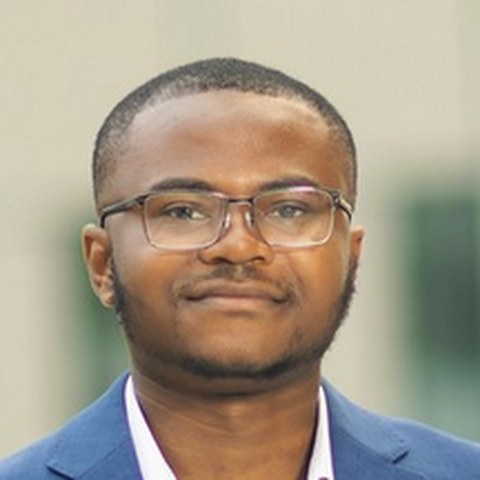
Nhlanhla Mavuso

Nhlanhla Mavuso

Co-Founder and CEO

Nhlanhla developed the approach behind Fluid Silicon through master's research at the University of Pennsylvania on online health monitoring and runtime repair for commercial FPGAs.

  • BA Physics, Penn 2026
  • BSE Computer Engineering, Penn 2026
  • MSE Electrical Engineering, Penn 2026
  • VIPER Class of 2026
  • President's Sustainability Prize, 2026
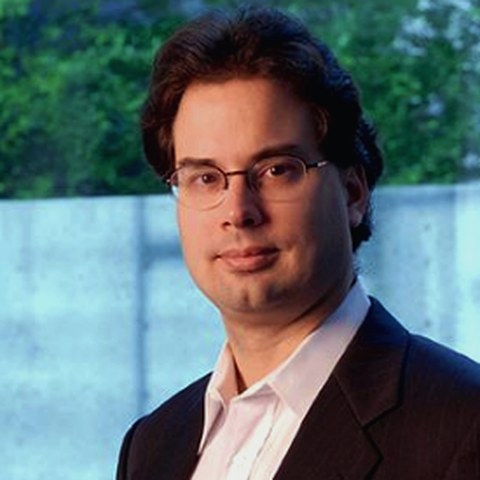
Dr. André DeHon

Dr. André DeHon

Co-Founder and Chief Scientific Advisor

André has worked in reconfigurable computing for decades, at Berkeley, Caltech and, since 2006, the University of Pennsylvania, where he is the Oliver C. Boileau Jr. and Nan Eleze Boileau Professor of Electrical Engineering. His research on FPGA architecture and interconnect underpins Fluid Silicon's approach.

  • SB, SM, PhD, MIT
  • ACM Fellow
  • IEEE Fellow
  • NAI Fellow
  • 10 papers in the TCFPGA Hall of Fame
  • Chair, ACM SIGDA TC on FPGAs
Victor Kogo

Victor Kogo

Head of Business Development

Victor works with the founders on Fluid Silicon's business strategy, its engagement with customers, partners and funders, and the financial analysis behind those decisions. He studied economics at the Wharton School and spent two summers at Boston Consulting Group before joining.

  • BS Economics, Wharton, Penn 2026
  • Boston Consulting Group, Summer Associate

Recognition

President's Sustainability Prize, 2026.

The University of Pennsylvania awarded Nhlanhla Mavuso its 2026 President's Sustainability Prize for Fluid Silicon, one of the largest awards of its kind in higher education.

Read the Penn Today story

Fluid Silicon's adaptive approach to chip performance exemplifies Penn's strength in applied innovation and offers a scalable path to greater efficiency and sustainability.
J. Larry Jameson, President, University of Pennsylvania. Penn Today, “Penn student develops a way for computer chips to run more efficiently,” May 5, 2026

Where we're headed

FPGAs are where we start.

Fluid Silicon has demonstrated its technology on real commercial FPGAs. The next phase is putting it to work wherever chips have to be trusted, and growing the technical team to get there.

1

Today

Per-element measurement on AMD and Altera parts already in production. Evaluations start read-only, on a sample of your cards.

2

Next

The full loop, monitor, model, tune and repair, deployed across data centers, aerospace and defense, telecommunications and the other industries where reliability and performance matter most.

3

Further

A chip that reports its own condition is useful wherever silicon has to be trusted. FPGAs are the first place it can be added without new silicon; they are the first step, not the last.

Partners and ecosystem

The parts and flows you already use.

The health layer integrates through each vendor's own toolchain: AMD Vivado for AMD parts, Altera Quartus for Altera parts. Fluid Silicon is not affiliated with or endorsed by either vendor; product names are their trademarks.

Devices

AMD and Altera families

AMD 7-series, UltraScale and UltraScale+ supported today, with select Altera Agilex 7 devices. Stratix 10, Arria 10 and Versal AI Core are in development. Device support

Research

University of Pennsylvania

Fluid Silicon grew out of reconfigurable-computing research at Penn. Research collaborations on variation, aging and reliability are welcome.

Partner program

Bring measured timing health to your customers

Board and system makers, cloud and infrastructure operators, systems integrators, EDA and tool vendors, and aerospace and defense primes. Every partnership starts with a technical session and an evaluation on real hardware. Talk to us

How we work

Measurement before opinion.

A number measured on your chip is worth more than a guardband set for someone else's. Margin should cover measurement error, not uncertainty.

Measured on the chip

Every logic element, at speed, in production, with no downtime.

Decisions on evidence

Replacements, upgrades and retirements rest on data from the card itself.

Your design, your control

Nothing changes on a production system without your approval.

Vendor-neutral by design

One health metric that means the same thing on every part you run.

Where we are

Philadelphia, PA.

One office, one bench, near the university where the research began.

Philadelphia, PA

Fluid Silicon is based in Philadelphia, close to the University of Pennsylvania, where the research behind the platform began.

info@fluidsilicon.com

Help build hardware people can trust.

FPGA and systems engineers, and interns, in Philadelphia. We reply to every application within five business days.